
Practical questions
Adult micropenis is not diagnosed by online comparison
Micropenis is a specific clinical diagnosis, not a label for being below an advertised average. It usually relates to development and requires an appropriate examination. An adult who is worried about size should not diagnose the condition from photographs, a changing flaccid appearance or social-media comparisons.
General information for adults. Not a substitute for medical assessment.
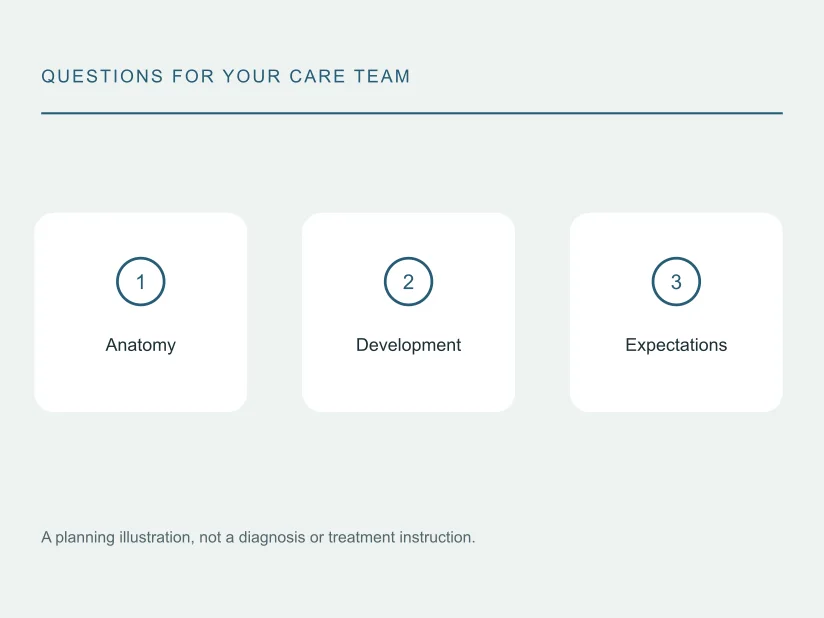
Ask which anatomical question is being answered
A clinician distinguishes normally formed but unusually small anatomy from concealment, surrounding tissue, skin problems or a new acquired change. A casual visible-length comparison cannot make that distinction. Bring the concern you want addressed—appearance, urination, erections or fertility—without repeatedly measuring yourself. These functions require their own assessment and should not be assumed from appearance alone or a single threshold found online.
Describe development and relevant health history
Mention whether the concern was present from childhood, any earlier endocrine assessment, pubertal development, previous surgery and current sexual or urinary symptoms. The clinician may consider whether a urology or endocrine referral is useful. Do not assume that a treatment discussed for an infant or child will have the same effect in an adult; timing, cause and treatment goals differ.
Keep treatment expectations separate from diagnosis
Ask what a confirmed finding would change, whether any investigation is indicated and which goals are realistic. A diagnosis is not automatic approval for hormone treatment or cosmetic surgery, and this guide confirms neither service availability nor an expected size gain. If worry occupies hours or affects relationships, describe that distress too; support can be appropriate whether the examination identifies an anatomical condition or normal variation.
Common questions
Is below-average size the same as micropenis?
No. A clinical definition and examination are needed; average comparisons are not a diagnosis.
Can a photograph confirm the diagnosis?
No. Perspective and concealment can mislead, and clinical measurement needs the right context.
Does the diagnosis prove infertility?
No. Fertility, erections and urinary function are separate questions for individual assessment.
Sources and information limits
Sources support general medical principles, not the UAE booking policies or service availability. Confirm instructions and local arrangements with the care provider. The update date does not claim clinician review.
Content policy and review statusQuestions before arranging an appointment?
Enquire about the next steps and availability. An enquiry does not confirm a booking or diagnosis and is not an emergency service.